martes, 9 de septiembre de 2025

MUSIC - 20th-Century Classical Music 2 / 7 - George Gershwin ( 1898 – 1937 )

 MUSIC 


                         20th-Century Classical Music 2 / 7 
                                    George Gershwin  
                                        ( 1898 – 1937 )

The name of George Gershwin ia always remembered by the fusion of different genres of music, where creativity stands up high and raises its banner as a sign of a crescent artistic career.

His works are masterpieces present in today´s American culture as in films, plays and television broadcasts.

It is a great pleasure to listen to his fine art and refined compositions.

 ALMO

almoxxi.blogspot.com


WIKIPEDIA - The Free Encyclopedia

George Gershwin ( born Jacob Gershwine; September 26, 1898 – July 11, 1937) was an American composer and pianist whose compositions spanned jazzpopular and classical music. Among his best-known works are the songs "Swanee" (1919) and "Fascinating Rhythm" (1924), the orchestral compositions Rhapsody in Blue (1924) and An American in Paris (1928), the jazz standards "Embraceable You" (1928) and "I Got Rhythm" (1930) and the opera Porgy and Bess (1935), which included the hit "Summertime". His Of Thee I Sing (1931) was the first musical to win the Pulitzer Prize for Drama.

Gershwin studied piano under Charles Hambitzer and composition with Rubin GoldmarkHenry Cowell, and Joseph Brody. He began his career as a song plugger but soon started composing Broadway theater works with his brother Ira Gershwin and with Buddy DeSylva. He moved to Paris, intending to study with Nadia Boulanger, but she refused him, afraid that rigorous classical study would ruin his jazz-influenced style; Maurice Ravel voiced similar objections when Gershwin inquired about studying with him. He subsequently composed An American in Paris, returned to New York City and wrote Porgy and Bess with Ira and DuBose Heyward. Initially a commercial failure, it came to be considered one of the most important American operas of the 20th century and an American cultural classic.

Gershwin moved to Hollywood and composed several film scores. He died in 1937, only 38 years old, of a brain tumor. His compositions have been adapted for use in film and television, with many becoming jazz standards.

Biography

Ancestors

Gershwin's parents were both Jewish immigrants from the Russian Empire. His paternal grandfather, Jakov Gershowitz, was born in Odessa, Russian Empire (now Ukraine), and had served for 25 years as a mechanic for the Imperial Russian Army to earn the right of free travel and residence as a Jew, finally retiring near Saint Petersburg, Russia. Jakov's teenage son, Moishe, George Gershwin's father, worked as a leather cutter for women's shoes. George's mother, Roza Bruskina, was born in Saint Petersburg, Russia.

Moishe met Roza in Vilna, Russian Empire (now Vilnius, Lithuania), where her father worked as a furrier. She and her family moved to New York because of increasing anti-Jewish sentiment in Russia, changing her first name to Rose. Moishe, faced with compulsory military service if he remained in Russia, moved to America as soon as he could afford to (arrived on August 14, 1890). Once in New York, he changed his first name to Morris. Gershowitz lived with a maternal uncle in Brooklyn, working as a foreman in a women's shoe factory. He married Rose on July 21, 1895, and Gershowitz soon Anglicized his name to Gershwine.Their first child, Ira Gershwin, was born on December 6, 1896, after which the family moved into a second-floor apartment at 242 Snediker Avenue in the East New York neighborhood of Brooklyn.
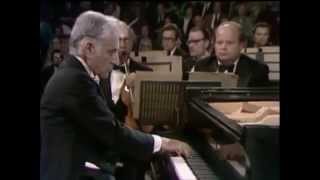

George Gershwin - Rhapsody in Blue - Leonard Bernstein, New York Philharmonic (1976)

domingo, 7 de septiembre de 2025

MUSIC - 20th-Century Classical Music 1/7 - Giacomo Puccini (1858 – 1924)

 MUSIC 


                                  20th-Century Classical Music 1 / 7
                                              Giacomo Puccini  
                                                 (1858 – 1924)

This period is a big challenge to define among all good listeners, but we will try to mention some of the most remarkable composers, starting with Giacomo Puccini who lived the transition of two centuries, and became one of the best Italian opera composers after Verdi. His reknown masterpieces include La Boheme ( 1896 ), Tosca (1900), Madama Butterfly (1904 ) and the unfinished Turandot which turned out to be one of the most beloved by opera singers of both XX and XXI Century.

Please enjoy all of his works but especially with our first selection, the famous Nessum Dorma, a beautiful creation of all times and tastes.  
 

WIKIPEDIA - The Free Encyclopedia

20th-century classical music is Western art music that was written between 1901 and 2000, inclusive. Musical style diverged during the 20th century as it never had previously, so this century was without a dominant style. Modernismimpressionism, and post-romanticism can all be traced to the decades before the turn of the 20th century, but can be included because they evolved beyond the musical boundaries of the 19th-century styles that were part of the earlier common practice periodNeoclassicism and expressionism came mostly after 1900. Minimalism started later in the century and can be seen as a change from the modern to postmodern era, although some date postmodernism from as early as about 1930. Aleatoryatonalityserialismmusique concrète, and electronic music were all developed during the century. Jazz and ethnic folk music became important influences on many composers during this century.

History

At the turn of the century, music was characteristically late Romantic in style. Composers such as Gustav MahlerRichard Strauss and Jean Sibelius were pushing the bounds of post-Romantic symphonic writing. At the same time, the Impressionist movement, spearheaded by Claude Debussy, was being developed in France. Debussy in fact loathed the term Impressionism: "I am trying to do 'something different—in a way realities—what the imbeciles call 'impressionism' is a term which is as poorly used as possible, particularly by art critics".  Maurice Ravel's music, also often labelled as impressionist, explores music in many styles not always related to it (see the discussion on Neoclassicism, below).

Many composers reacted to the Post-Romantic and Impressionist styles and moved in different directions. An important moment in defining the course of music throughout the century was the widespread break with traditional tonality, effected in diverse ways by different composers in the first decade of the century. From  sprang an unprecedented "linguistic plurality" of styles, techniques, and expression. In ViennaArnold Schoenberg developed atonality, out of the expressionism that arose in the early part of the 20th century. He later developed the twelve-tone technique which was developed further by his disciples Alban Berg and Anton Webern; later composers (including Pierre Boulez) developed it further still. Stravinsky (in his last works) explored twelve-tone technique, too, as did many other composers; indeed, even Scott Bradley used the technique in his scores for the Tom and Jerry cartoons.


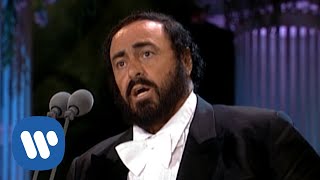
Luciano Pavarotti sings "Nessun dorma" from Turandot (The Three Tenors in Concert 1994)

POESIA - Que EL SEÑOR esté contigo . . . POETRY - May the LORD be with you

 POESIA  


                                    Que EL SEÑOR  esté contigo

Permitid su Luz fluir en tu Ser,
Orad en el momento más perfecto para ti,
lo trascendental está en tu conexión divina,
Alabad Su Mensaje, aquí y ahora.
Amen 


POETRY 

                                May the LORD be with you

Allow His Light to flow into your Being,
Pray at the most perfect moment for you,
What is transcendental lies in your divine connection,
Praise His Message, here and now.
Amen.


ALMO
Septiembre 7, 2025


Millones de personas se preparan para esta noche. Palabra profética de hoy | El mensaje de Dios h...

domingo, 31 de agosto de 2025

POETRY - Labor Day 2025

 POETRY


                    Labor Day 2025

As we enter September, a new present appears,
we say goodbye to the high temperatures of summer,
we can see autumn leaves start falling,
a special day to celebrate with all workers, from coast to coast.

Everyone deserves a day of rest,
after a full year of continuous efforts,
with blessings that also fall upon everyone,
the Lord teaches us all the meanings of gratitude.

Rejoice always, women and men of goodwill,
because better days are coming,
full of grace, under the heavens of Justice and Peace,
be proud to have the honor of working for You.


ALMO


Neil Diamond America Video with Lyrics

https://youtu.be/bCQ-GjHfbYw?si=aDYiQhfCRxSmH0WN

sábado, 30 de agosto de 2025

FILOSOFIA - Nuestra Palabra


FILOSOFIA 


                                        Nuestra Palabra


       El hombre está acogotado por fantasmas que le hacen la vida angustiosa. - El más temible de esos fantasmas es El Tiempo. - El hombre crea la Imagen y luego le teme a la Imagen por él creada. - Eso es El Tiempo, una Imagen. - El hombre inventó el almanaque, fabricó el reloj para aprisionar El Tiempo y ponerlo a su servicio, para que le fuese útil, pero, qué ha sucedido ? Que se ha convertido en su esclavo, en un amo que no tiene compasión de él. - La vida transcurre y el Tiempo es el camino que ella transita y que va construyendo  ella misma día a día ; Mañana lo estamos haciendo Hoy ; La Tejedora del Tiempo en este momento está empezando a tejerlo, con nuestras vidas, con nuestros actos. -


       La Loca Imaginación de los hombres fabrica las imágenes, los fantasmas de una cosa que no está hecha y los presenta como el futuro, como una realidad a la que tenemos que aceptar como cosa cierta, y eso hace sufrir al hombre. El Tiempo es como todo los que la Naturaleza da, igual para todos, es como la lluvia, el Sol. como el calor o el frío ; para cada hombre, El Tiempo significa algo diferente, porque se siente diferente. No es lo que la loca imaginación nos hizo soñar y contemplamos.


       La realidad de hoy y la fantasía del futuro como cosa real, nos presentan al Tiempo como un terrible fantasma. Pero El Tiempo es un camino que todos los días recorremos y todos los días es nuevo.


                                                                              OM  TAT  SAT


Fuente : Órgano de Cultura y Difusión del Centro de Orientación Filosófica, Mayo 1974.  Derechos Reservados.


jueves, 28 de agosto de 2025

MUSIC - Impressionism 7 / 7 - Howard Hanson ( 1896 –1981 )

 MUSIC 


                    Impressionism  7 / 7 
                      Howard Hanson 
                       ( 1896 –1981 )


A marvelous selection of Impressionism in music is this one, with well recognized composers as part of a heritage of beauty and harmony born in the souls of remarkable musicians between the end  of XIX and beginning of the XX century.

We hope your taste for good quality is satisfied by this initial number of renown names of the so called impressionism.


Wikipedia, The Free Encyclopedia
Howard Harold Hanson (October 28, 1896 – February 26, 1981) was an American composerconductor, educator and music theorist. As director for forty years of the Eastman School of Music, he raised its quality and provided opportunities for commissioning and performing American classical music. In 1944, he won a Pulitzer Prize for his Symphony No. 4, and received numerous other awards, including the George Foster Peabody Award for Outstanding Entertainment in Music in 1946.

Hanson was born in Wahoo, Nebraska, to Swedish immigrant parents, Hans and Hilma (née Eckstrom) Hanson. In his youth he studied music with his mother. Later, he studied at Luther College in Wahoo, receiving a diploma in 1911, then at the Institute of Musical Art, the forerunner of the Juilliard School, in New York City, where he studied with the composer and music theorist Percy Goetschius in 1914.

Afterward he attended Northwestern University, where he studied composition with church music expert Peter C. Lutkin and Arne Oldberg. Hanson also studied piano, cello, and trombone. He earned his BA degree in music from Northwestern in 1916, and began his teaching career as a teacher's assistant.


Career

In 1916, Hanson was hired for his first full-time position as a music theory and composition teacher at the College of the Pacific in California. Only three years later, the college appointed him Dean of the Conservatory of Fine Arts in 1919. In 1920, Hanson composed The California Forest Play, his earliest work to receive national attention. Hanson also wrote a number of orchestral and chamber works during his years in California, including Concerto da CameraSymphonic LegendSymphonic Rhapsody, various solo piano works, such as Two Yuletide Pieces, and the Scandinavian Suite, which celebrated his Lutheran and Scandinavian heritage.

In 1921 Hanson was the first winner of the American Academy in Rome's "Rome Prize" in musical composition, awarded for both The California Forest Play and his symphonic poem Before the Dawn. Thanks to the award, Hanson lived in Italy for three years. During his time in Italy, Hanson wrote a Quartet in One MovementLux AeternaThe Lament for Beowulf (orchestration Bernhard Kaun), and his Symphony No. 1, "Nordic", the premiere of which he conducted with the Augusteo Orchestra on May 30, 1923. The three years Hanson spent on his Fellowship at the American Academy were, he considered, the formative years of his life, as he was free to compose, conduct without the distraction of teaching—he could devote himself solely to his art. (It has been incorrectly stated that Hanson studied composition and/or orchestration with Ottorino Respighi, who in turn had studied orchestration with Nikolay Rimsky-Korsakov. Hanson's unpublished autobiography refutes the statement, attributed to Ruth Watanabe, that he had studied with Respighi. While Hanson may not have pursued formal studies with Respighi while in Rome, he apparently did receive advice from him. In addition, Respighi invited Hanson to attend rehearsals and performances of his orchestral concerts. As a result of these interactions, Hanson credited Respighi as a significant influence on his use of orchestral textures and instrumentation. In addition, he cited the works of several other composers as being influential while studying in Rome including: Nicolai Rimsky-KorsakovGustav HolstGiovanni Palestrina and Richard Wagner.


ALMO


Hanson: Symphony No. 2, Op. 30, "Romantic"

MUSICA - Sabor a Navidad en Venezuela 1 / 12

  MUSICA                    Sabor a Navidad en Venezuela                                      1 / 12 Compartir la Navidad en Venezuela es si...