jueves, 21 de agosto de 2025

MUSIC - Impressionism 5 / 7 Manuel de Falla (1876 – 1946)

 MUSIC 


                    Impressionism  5 / 7 
                       Manuel de Falla  
                       (1876 –  1946) 


A marvelous selection of Impressionism in music is this one, with well recognized composers as part of a heritage of beauty and harmony born in the souls of remarkable musicians between the end  of XIX and beginning of the XX century.

We hope your taste for good quality is satisfied by this initial number of renown names of the so called impressionism.

ALMO


Wikipedia, The Free Encyclopedia . . . 
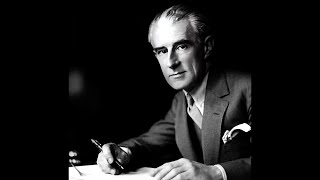
Manuel de Falla y Matheu ( 23 November 1876 – 14 November 1946) was a Spanish composer and pianist. Along with Isaac AlbénizFrancisco Tárrega, and Enrique Granados, he was one of Spain's most important musicians of the first half of the 20th century. He has a claim to being Spain's greatest composer of the 20th century, although the number of pieces he composed was relatively modest.

Falla was born Manuel María de los Dolores Falla y Matheu in Cádiz. He was the son of José María Falla, a Valencian, and María Jesús Matheu, from Catalonia.

In 1889 he continued his piano lessons with Alejandro Odero and learned the techniques of harmony and counterpoint from Enrique Broca. At age 15 he became interested in literature and journalism and founded the literary magazines El Burlón and El Cascabel.

By 1900 he was living with his family in the capital, where he attended the Real Conservatorio de Música y Declamación. He studied piano with José Tragó, a colleague of Isaac Albéniz, and composition with Felip Pedrell. In 1897 he composed Melodía for cello and piano and dedicated it to Salvador Viniegra, who hosted evenings of chamber music that Falla attended. In 1899, by unanimous vote, he was awarded the first prize at the piano competition at his school of music. He premiered his first works: Romanza para violonchelo y pianoNocturno para pianoMelodía para violonchelo y pianoSerenata andaluza para violín y piano, and Cuarteto en Sol y Mireya. That same year he started to use de with his first surname, making Manuel de Falla the name he became known as from that time on. When only the surname is used, however, the de is omitted.

Falla moved to Paris in 1907, where he remained for seven years. There he met a number of composers who had an influence on his style, including Maurice RavelClaude Debussy and Paul Dukas, as well as Igor StravinskyFlorent SchmittIsaac Albéniz and the impresario Sergei Diaghilev.[1] In 1908 King Alfonso XIII awarded him a royal grant that enabled him to remain in Paris while he finished his Cuatro piezas españolas. In 1910 Falla met Stravinsky and in 1911–12 traveled to London, Brussels and Milan to give concerts and investigate possible venues for La vida breve, which he had composed shortly after his arrival in Paris in 1907 but which, despite the support of Dukas and Falla's own best efforts, was not finally performed until 1 April 1913 at the Municipal Casino in Nice, with the libretto translated into French by the dramatist Paul Milliet. A second production was given the following year at the Opéra-Comique, to acclaim from critics such as Pierre Lalo and André Coeuroy.[1] He wrote Siete canciones populares españolas, which he finished in mid-1914. Shortly after, World War I began, forcing Falla to return to Madrid.[1] While at no stage was he a prolific composer, it was then that he entered into his mature creative period.

In Madrid he composed several of his best-known pieces, including:

Barenboim - "El amor brujo" (Danza ritual del fuego) Falla

https://youtu.be/auRUxPPqDcQ?si=vHBg6xCNqrRc1ZbC

viernes, 15 de agosto de 2025

MUSIC - Impressionism 4 / 7 - Maurice Ravel ( 1875 – 1937 )

 MUSIC 


                     Impressionism  4 / 7 
                         Maurice Ravel  
                        ( 1875 –  1937 )
                        

A marvelous selection of Impressionism in music is this one, with well recognized composers as part of a heritage of beauty and harmony born in the souls of remarkable musicians between the end  of XIX and beginning of the XX century.

We hope your taste for good quality is satisfied by this initial number of renown names of the so called impressionism.

ALMO


Wikipedia, The Free Encyclopedia . . . 

Joseph Maurice Ravel (7 March 1875 – 28 December 1937) was a French composer, pianist and conductor. He is often associated with Impressionism along with his elder contemporary Claude Debussy, although both composers rejected the term. In the 1920s and 1930s Ravel was internationally regarded as France's greatest living composer.

Born to a music-loving family, Ravel attended France's premier music college, the Paris Conservatoire; he was not well regarded by its conservative establishment, whose biased treatment of him caused a scandal. After leaving the conservatoire, Ravel found his own way as a composer, developing a style of great clarity and incorporating elements of modernismbaroqueneoclassicism and, in his later works, jazz. He liked to experiment with musical form, as in his best-known work, Boléro (1928), in which repetition takes the place of development. Renowned for his abilities in orchestration, Ravel made some orchestral arrangements of other composers' piano music, of which his 1922 version of Mussorgsky's Pictures at an Exhibition is the best known.

A slow and painstaking worker, Ravel composed fewer pieces than many of his contemporaries. Among his works to enter the repertoire are pieces for piano, chamber music, two piano concertos, ballet music, two operas and eight song cycles; he wrote no symphonies or church music. Many of his works exist in two versions: first, a piano score and later an orchestration. Some of his piano music, such as Gaspard de la nuit (1908), is exceptionally difficult to play, and his complex orchestral works such as Daphnis et Chloé (1912) require skilful balance in performance.

Ravel was among the first composers to recognise the potential of recording to bring their music to a wider public. From the 1920s, despite limited technique as a pianist or conductor, he took part in recordings of several of his works; others were made under his supervision.

Maurice Ravel - Bolero

jueves, 14 de agosto de 2025

POESIA - 17 - Agosto 2025


POESIA   

                              17  

En el calor del verano aparecen aires de frescor,

esos mismos que surgen ante las dudas y preguntas,

vienen a darnos alivios y esperanzas,

al observar los contrastes entre unos y otros,

comenzamos a vivir entre opuestos, 

las maravillas del Cosmos o el Universo,

que nos nutre, en silencio, y obsequia la Paz Verdadera.


ALMO
17 de Agosto de 2025


miércoles, 13 de agosto de 2025

MUSIC - Impressionism 3 / 7 Alexander Scriabin ( 1871 – 1915 )


MUSIC 

                     Impressionism  3 / 7 
                        Alexander Scriabin
                                 ( 1871 –  1915 )
                        

A marvelous selection of Impressionism in music is this one, with well recognized composers as part of a heritage of beauty and harmony born in the souls of remarkable musicians between the end  of XIX and beginning of the XX century.

We hope your taste for good quality is satisfied by this initial number of renown names of the so called impressionism.

ALMO


Wikipedia, The Free Encyclopedia

Alexander Nikolayevich Scriabin (6 January 1872  –  14 April] 1915) was a Russian composer and pianist. Before 1903, Scriabin was greatly influenced by the music of Frédéric Chopin and composed in a relatively tonal, late-Romantic idiom. Later, and independently of his influential contemporary Arnold Schoenberg, Scriabin developed a much more dissonant musical language that had transcended usual tonality but was not atonal,  which accorded with his personal brand of metaphysics. Scriabin found significant appeal in the concept of Gesamtkunstwerk as well as synesthesia, and associated colours with the various harmonic tones of his scale, while his colour-coded circle of fifths was also inspired by theosophy. He is often considered the main Russian symbolist composer and a major representative of the Russian Silver Age.

Scriabin was an innovator as well as one of the most controversial composer-pianists of the early 20th century. The Great Soviet Encyclopedia said of him, "no composer has had more scorn heaped on him or greater love bestowed." Leo Tolstoy described Scriabin's music as "a sincere expression of genius." Scriabin's oeuvre exerted a salient influence on the music world over time, and inspired many composers, such as Nikolai Roslavets and Karol Szymanowski. But Scriabin's importance in the Russian (subsequently Soviet) musical scene, and internationally, drastically declined after his death. According to his biographer Faubion Bowers, "No one was more famous during their lifetime, and few were more quickly ignored after death." Nevertheless, his musical aesthetics have been reevaluated since the 1970s, and his ten published sonatas for piano and other works have been increasingly championed, garnering significant acclaim in recent years.


A. Scriabin: Prometheus or the Poem of Fire - Prométhée ou le Poème du feu op. 60 (Boulez)

viernes, 8 de agosto de 2025

MUSIC - Impressionism 2 / 7 - Claude Debussy ( 1862 – 1918 )


MUSIC 

                     Impressionism  2 / 7 
                         Claude Debussy  
                        ( 1862 –  1918 ) 
                        

A marvelous selection of Impressionism in music is this one, with well recognized composers as part of a heritage of beauty and harmony born in the souls of remarkable musicians between the end  of XIX and beginning of the XX century.

We hope your taste for good quality is satisfied by this initial number of renown names of the so called impressionism.

ALMO


Wikipedia , The Free Encyclopedia . . . 

Achille Claude Debussy[n 1] (French pronunciation: [aʃil klod dəbysi]; 22 August 1862 – 25 March 1918) was a French composer. He is sometimes seen as the first Impressionist composer, although he vigorously rejected the term. He was among the most influential composers of the late 19th and early 20th centuries.

Born to a family of modest means and little cultural involvement, Debussy showed enough musical talent to be admitted at the age of ten to France's leading music college, the Conservatoire de Paris. He originally studied the piano, but found his vocation in innovative composition, despite the disapproval of the Conservatoire's conservative professors. He took many years to develop his mature style, and was nearly 40 when he achieved international fame in 1902 with the only opera he completed, Pelléas et Mélisande.

Debussy's orchestral works include Prélude à l'après-midi d'un faune (1894), Nocturnes (1897–1899) and Images (1905–1912). His music was to a considerable extent a reaction against Wagner and the German musical tradition. He regarded the classical symphony as obsolete and sought an alternative in his "symphonic sketches", La mer (1903–1905). His piano works include sets of 24 Préludes and 12 Études. Throughout his career he wrote mélodies based on a wide variety of poetry, including his own. He was greatly influenced by the Symbolist poetic movement of the later 19th century. A small number of works, including the early La Damoiselle élue and the late Le Martyre de saint Sébastien have important parts for chorus. In his final years, he focused on chamber music, completing three of six planned sonatas for different combinations of instruments.

With early influences including Russian and Far Eastern music and works by Chopin, Debussy developed his own style of harmony and orchestral colouring, derided – and unsuccessfully resisted – by much of the musical establishment of the day. His works have strongly influenced a wide range of composers including Béla BartókIgor StravinskyGeorge GershwinOlivier MessiaenGeorge Benjamin, and the jazz pianist and composer Bill Evans. Debussy died from cancer at his home in Paris at the age of 55 after a composing career of a little more than 30 years.


Debussy: Prélude à l’après-midi d’un faune ∙ hr-Sinfonieorchester ∙ Andrés Orozco-Estrada

MUSICA - Sabor a Navidad en Venezuela 2 / 12

  MUSICA                    Sabor a Navidad en Venezuela                                      2 / 12 Compartir la Navidad en Venezuela es si...